


Online sleep assessment
, here’s your results:


- At Risk
- Low Risk
Obstructive Sleep Apnea
Your self-reported responses may indicate you have a risk of obstructive sleep apnea.
Your self-reported responses may indicate you have low risk of obstructive sleep apnea.
Sleep apnea is a sleep disorder that causes your body to stop breathing while you sleep. Air stops flowing to your lungs for 10 seconds or longer which can happen repeatedly during the night. Common symptoms of OSA include excessive daytime sleepiness and snoring.
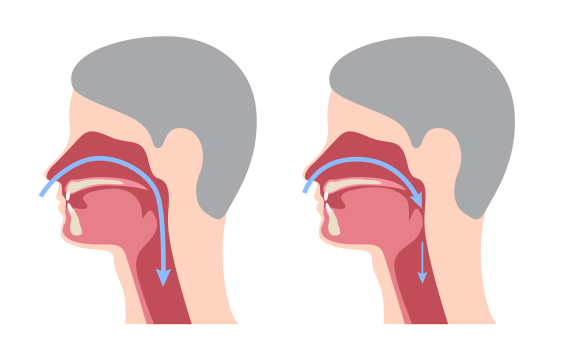
- Airway walls collapse, blocking airflow. Breathing then pauses or stops (apnea). Paused breathing can result in a drop of blood oxygen levels.
Symptoms
You have self-reported none of the common Obstructive Sleep Apneoa symptoms.
You have self-reported one or more of the following common Obstructive Sleep Apnea symptoms:2
- Snoring
- Hold breath while sleeping
- Wake with dry mouth
- Morning headaches
- Feeling sleepy during the day
- Wake gasping for breath
Considerations
- A sleep test can provide a more detailed and reliable information to diagnose sleep disorders.
- Seek medical advice from your doctor or talk to our sleep coach to find out more.
Your results also indicate
- Suggested
Insomnia
Insomnia is the name given to regularly having a hard time falling asleep, staying asleep or getting back to sleep if you wake in the night. Insomnia can make you feel drowsy during the day, and effect memory, concentration and learning.

- Suggested
Snoring
Snoring can be a sign that you’re not breathing properly when you sleep. As you fall asleep the muscles in your mouth, tongue and throat relax. Snoring occurs when these muscles relax too much and they partially block your airway and vibrate.
- Suggested
Partner Snoring
Snoring can be a sign that you’re not breathing properly when you sleep. As you fall asleep the muscles in your mouth, tongue and throat relax. Snoring occurs when these muscles relax too much and they partially block your airway and vibrate.
- Suggested
Heartburn / Acid Reflux
Acid reflux and heartburn can disrupt sleep due to a burning sensation in the chest or throat caused by backflow of stomach acid. Sleeping on your left side, avoiding meals close to bedtime and elevating your upper body are some ways in which to reduce to impact on heartburn/acid reflux on your sleep.3
- Suggested
Fragmented Sleeper
Fragmented sleep is a sleep pattern characterized by numerous interruptions throughout the night. If you’re suffering from disrupted or fragmented sleep, keeping to a regular sleep schedule, learning to manage stress and regular exercise may help.4
- Suggested
Restless Leg
Restless legs syndrome is a condition that causes uncontrollable sensations in the legs and an urge to move them, usually due to discomfort. Lifestyle changes such as reducing intake of alcohol/caffeine, massaging your legs and exercise may help to minimise the symptoms of Restless legs syndrome. 5
- Suggested
Bruxism
Bruxism is a condition where a person clenches or grinds their teeth. This can be caused associated with stress, age and certain types of medication. In many instances, people outgrow bruxism with age. If symptoms do persist, consider talking to your dentist or doctor.6
Next steps
I want to...

STEP 1
Talk to a Sleep Coach*
Speak to our sleep coach about your sleep health
- Phone consult

STEP 2
Take a sleep test
A sleep test can provide more detailed and reliable information to diagnose sleep disorders. Ask your GP which sleep test is right for you.

STEP 3
Find a ResMed store
Need to check-in for some face-to-face help?
“With the proper diagnosis and treatment approach, most sleep disorders are easily treated.”
Dr. Wesley E. Fleming | The Sleep Center Orange County